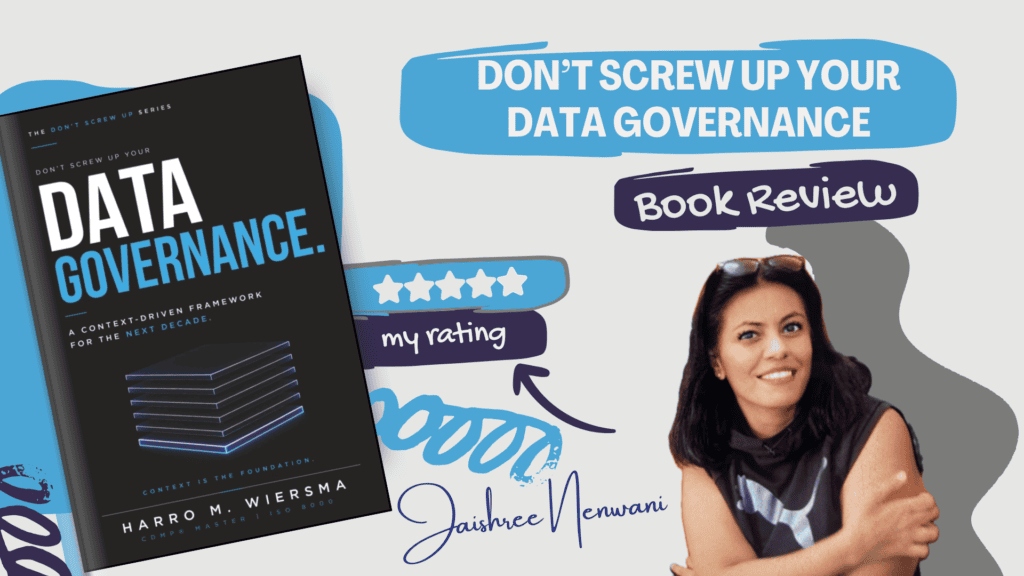
Imagine having plenty of data, skilled people, advanced technology, and enough rules to fill a library, yet still struggling to make a simple business decision. Sounds frustrating, doesn’t it? That is the problem Harro M. Wiersma explores in Don’t Screw Up Your Data Governance: A Context-Driven Framework for the Next Decade. This book made me look at data governance from a different perspective. Sometimes, the problem isn’t a lack of information or expertise. It’s that everyone has a different understanding of the same information.
Understanding the Real Problem with Data Governance
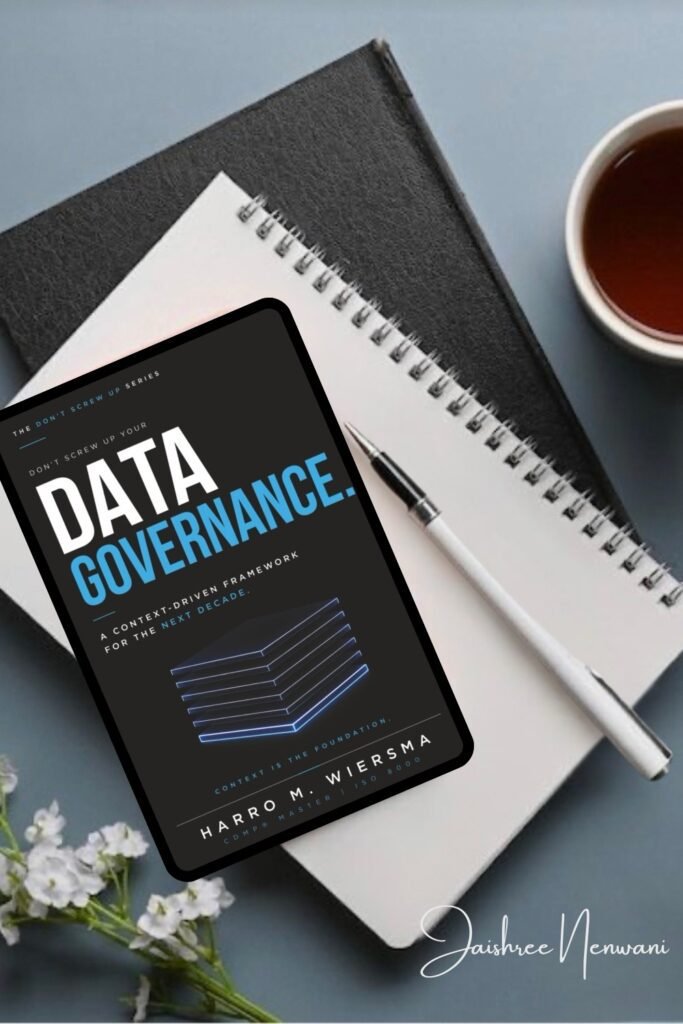
One of the main arguments in this book is that organisations don’t necessarily fail because they lack governance frameworks. They struggle because their existing frameworks, teams, and processes often work in isolation.
The author explains how departments can have their own definitions, policies, and priorities, all of which might make sense individually but create confusion when they come together. The result? Delayed projects, repeated work, conflicting decisions, and unnecessary meetings.
I found this idea particularly interesting because it highlights a problem that goes beyond technology. Having more rules doesn’t automatically mean better management. Sometimes, what is missing is a shared understanding of why those rules exist and how they connect.
Why Context Matters in Data Management?
The heart of the book is the Governance Context Foundation (GCF), a framework designed to bring different governance functions together through shared, accessible, and continuously updated context.
In simple words, the author wants organisations to understand not just what their data contains, but also what it means, where it comes from, how it is used, and why certain decisions have been made about it.
I appreciated how the book distinguishes context from metadata. Knowing a field’s name or technical structure doesn’t necessarily tell us what it means to the business or why it matters.
This distinction becomes even more important as organisations increasingly rely on artificial intelligence. If AI systems are trained on inconsistent data and conflicting definitions, they can carry those problems into their decisions. The book makes a convincing case for establishing clarity before expecting technology to deliver reliable results.
A Practical Guide to AI, Compliance, and Business Decisions
What I liked about this book is that it doesn’t stop at explaining the problem. It explores how context-driven governance can be applied to data quality, master data management, privacy, compliance, data architecture, migration, AI and analytics, and organisational change.
The author also connects these ideas to implementation, leadership, and the business case for change.
Another useful feature is the recurring Monday Morning Deliverable section. These exercises encourage readers to put the ideas into practice instead of simply moving on to the next chapter. From auditing conflicting definitions to mapping governance responsibilities and assessing migration readiness, the book offers concrete starting points for organisations that want to improve their existing systems.
I also liked that the proposed Governance Context Foundation is presented as a way to connect existing frameworks rather than replace everything an organisation already uses.
Who Should Read This Book?
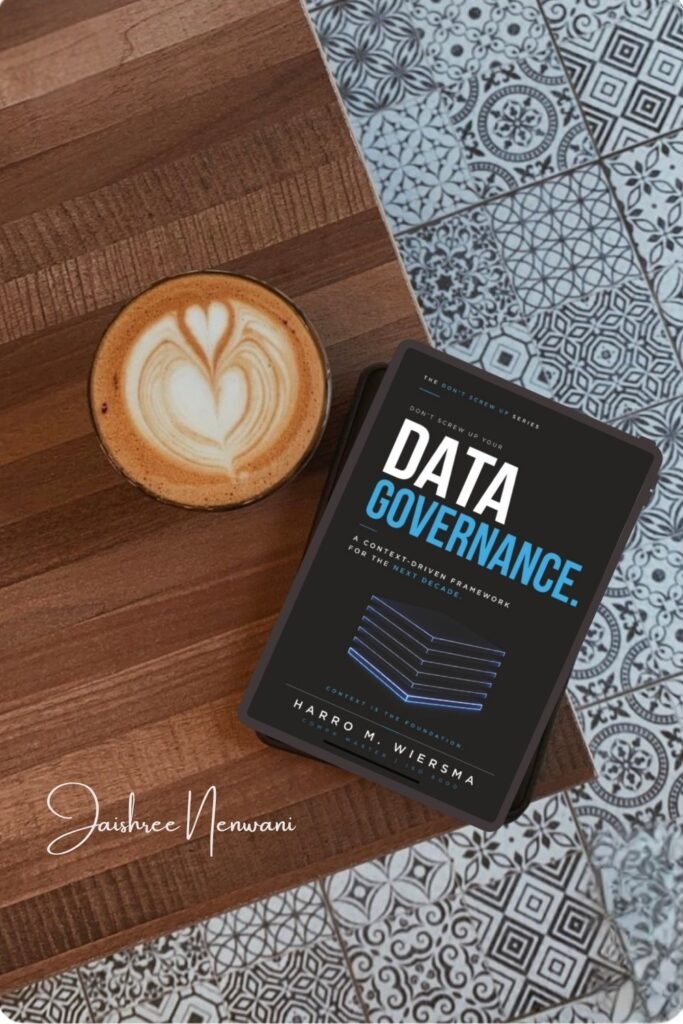
Don’t Screw Up Your Data Governance is best suited to data leaders, chief data officers, governance professionals, enterprise architects, compliance teams, and business leaders working with complex data environments.
Readers looking for a light introduction to data management may find the book detailed and technical in places. Its focus is on organisational systems, governance structures, and implementation rather than personal stories or an easy introduction to the subject.
However, for professionals dealing with fragmented data processes, inconsistent definitions, or the growing governance demands of AI, the book offers plenty to think about.
I found its central message valuable: effective data governance is not just about creating more policies or adding more people. It is about connecting information, decisions, responsibilities, and business needs so that everyone can work from a shared understanding. The emphasis on practical exercises also makes the book more actionable than a purely theoretical discussion.
If your work involves data governance and you are looking for a structured way to rethink how your organisation manages data, this book deserves a place on your reading list. Here’s the link to the book- Don’t Screw Up Your Data Governance by Harro M. Wiersma
About the Author
Harro M. Wiersma is the author of Don’t Screw Up Your Data Governance: A Context-Driven Framework for the Next Decade. In this book, he explores the challenges of fragmented governance and presents the Governance Context Foundation as an approach to making data governance more integrated, accessible, and effective in the years ahead.
Discover more worth-reading and interesting books Head towards the Book Review section.